
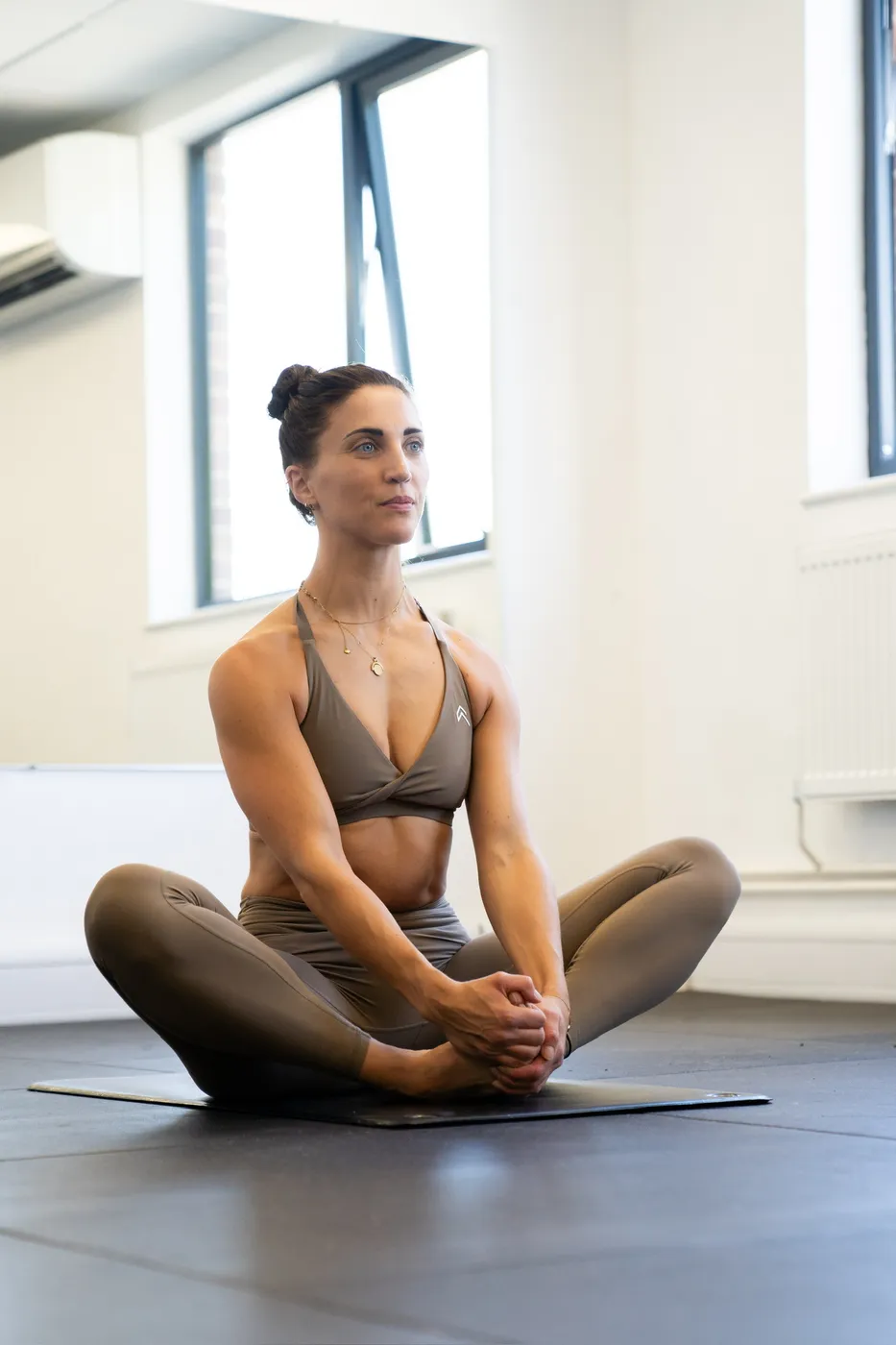
The short answer: start with a 10 minute walk most days and two short strength sessions a week, then build up gradually over two to three months. The NHS target for adults is 150 minutes of moderate activity a week plus strength on 2 days, but the UK Chief Medical Officers say any activity is better than none.
If you used to train and life got in the way, you are far from alone. A baby, a new job, an injury, a parent who needed you or just a few busy years can turn a month off into five. This guide covers how to start exercising again, what to do in the first eight weeks, and what changes if you have had a baby or you are in your 40s or 50s.
How do you start exercising again after a long break?
Start smaller than you think you need to, and make the first goal turning up rather than working hard.
The UK Chief Medical Officers’ physical activity guidelines, updated in July 2026, say “any activity is better than none and more is better still”. They also say a smaller target, such as 10 minutes at a time, works as a first step for people starting from low levels of activity.
So your first fortnight can be very simple:
- A walk most days, 10 minutes is fine, at a pace where you can talk but not sing.
- Two strength sessions a week of 15 to 20 minutes, using your body weight or light dumbbells.
- A rest day between strength sessions.
That is the whole plan for now. It should feel too easy, which is the point: you are building the routine before the fitness.
How much exercise should you aim for?
The NHS says adults should do at least 150 minutes of moderate activity a week, plus strengthening activities on at least 2 days.
That is the target from the NHS physical activity guidelines for adults. Brisk walking, cycling, dancing and hiking all count as moderate activity. Strengthening activity has to work all the major muscle groups: legs, hips, back, stomach, chest, shoulders and arms.
You do not need to hit it in week one. Sport England’s Active Lives survey for November 2024 to November 2025 found 62.2% of women in England met the guidelines, compared with 67.3% of men. If you are below it right now, you are in a big group. The Chief Medical Officers say the biggest health gains come from moving from very little activity to some.
What should the first eight weeks look like?
It depends on where you are starting from. Use the row that sounds most like you.
| Where you are | First two weeks | By week eight | Check first |
|---|---|---|---|
| A long break, no health problems | 10 minute walks most days, 2 short strength sessions | 150 minutes of walking or cardio a week, 2 to 3 strength sessions of 30 to 40 minutes | Nothing, unless something hurts |
| After a baby | Pelvic floor exercises daily, short walks | Gentle strength twice a week, building intensity slowly | Your 6 to 8 week postnatal check |
| After a C-section | Walking and pelvic floor exercises | Follow a week-by-week guide | Your postnatal check, and a women’s health physio if anything feels wrong |
| In your 40s or perimenopause | Walks plus 2 full-body strength sessions | Heavier weights, 2 to 3 sessions a week | A GP if you have a heart or blood pressure condition |
| In your 50s or after menopause | As above, adding balance work | Strength, impact and balance each week | A GP if you have osteoporosis or past fractures |
| After illness or low mood | Short walks, nothing that leaves you wiped out | Gradual build, guided by how you feel the next day | Your GP, before you start |
How do you get back into exercise after having a baby?
Start with pelvic floor exercises and walking, get your 6 to 8 week postnatal check, then build up intensity over at least three months.
The UK Chief Medical Officers’ guidelines say that after the 6 to 8 week postnatal check, and depending on how you feel, more intense activity can gradually come back. They describe building from moderate to vigorous over at least 3 months. They also say strength training should be part of it.
The NHS page on your post-pregnancy body suggests avoiding sit-ups, planks and high-impact exercise to start with. If there is still an obvious gap in your stomach muscles 8 weeks after the birth, it says to contact your GP.
See your GP or ask for a referral to a women’s health physio if you are leaking when you cough, jump or run, if you feel heaviness or dragging in your pelvis, or if your scar or back hurts. Our guides to diastasis recti exercises, exercise after a C-section and the postpartum belly go into each of those. Our postnatal coaching is built around this stage.
How do you start working out again at 40 or 50?
Put strength training first, because muscle and bone both decline with age and lifting is how you hold on to them.
The plan above still works. What changes is the emphasis: two or three strength sessions a week matter more than extra cardio, and from your 50s balance work and some impact (like brisk stepping or small jumps, if your pelvic floor allows) help your bones. Our guide to strength training for women over 40 covers how heavy to lift and which movements to start with. If you are in perimenopause or menopause, read the best exercise for menopause too.
How do you start working out again without getting sore?
Use lighter weights than you think you need for the first two weeks, do fewer sets, and stop each set with two or three reps left in you.
Some stiffness a day or two after your first sessions is normal, especially in your legs. Building up slowly keeps it mild. What makes it bad is going straight back to the weights you used to lift, or doing a long class on day one.
Three things help:
- One or two sets of each exercise for the first fortnight, not three or four.
- Keep moving the next day. A walk eases stiffness better than sitting still.
- Add one thing a week: a set, a few reps or a little weight. Never all three at once.
Sharp pain, pain in a joint, or pain that gets worse over a few days is different. Stop that exercise and get it checked.
How long does it take to get back into a routine?
Usually a couple of months, and missing a day here and there does not undo it.
Research on habit formation suggests repeating something in the same place and time is what makes it automatic. That takes longer for some people than others. We go through the research, and how to plan around low-motivation days, in how to motivate yourself to work out.
What if the gym makes you nervous?
Start at home or go at a quiet time, and walk in with your session written down.
If walking back into a gym is the part you are dreading, our guide to gym anxiety covers it step by step. If you would like a first programme to follow, there is a beginner strength training plan for women too.
When should you see a GP before starting?
The NHS suggests speaking to your GP first if you have not exercised for some time, or if you have a medical condition or concern.
That matters most if you have a heart or blood pressure condition, diabetes, a recent injury or operation, or you are pregnant or have recently given birth. Chest pain, dizziness or unusual breathlessness during exercise are reasons to stop and get medical advice.
Questions women ask about getting back into exercise
How do I get back into exercise after years of inactivity?
The same way as after a short break, just slower. Walk most days, add two short strength sessions a week, and give yourself two to three months to build up to the NHS target. Speak to your GP first if it has been years.
How long does it take to regain fitness after a long break?
Longer than a month and less than you fear. As a guide, the NHS Couch to 5K plan takes beginners from walking to running for 30 minutes in 9 weeks, with 3 runs a week.
What are the 2-2-2, 3-3-3 and 5-5-5-30 rules?
They are gym shorthands with several versions online, and no UK health body uses them. For getting back into exercise, the NHS guidance is a better guide: 150 minutes of moderate activity a week and strength on at least 2 days.
How do I gently get back into exercise?
Pick activities you can talk through: walking, swimming, cycling on the flat and body weight strength work. Keep sessions short, keep a rest day between strength sessions and build up week by week.
How do I get back into exercise after depression or illness?
Talk to your GP first, then start with short walks and build up by how you feel the next day. If a session leaves you wiped out, the next one should be shorter.
Getting back into it with a coach
Doing it alone works for some women. Others find it easier when someone else writes the plan and notices when they go quiet. At ALTR, your coach writes a strength plan around where you are now, including after a baby or in menopause, and checks in with you on WhatsApp. Read about our coaching.
When you are ready to start again, book your free call.