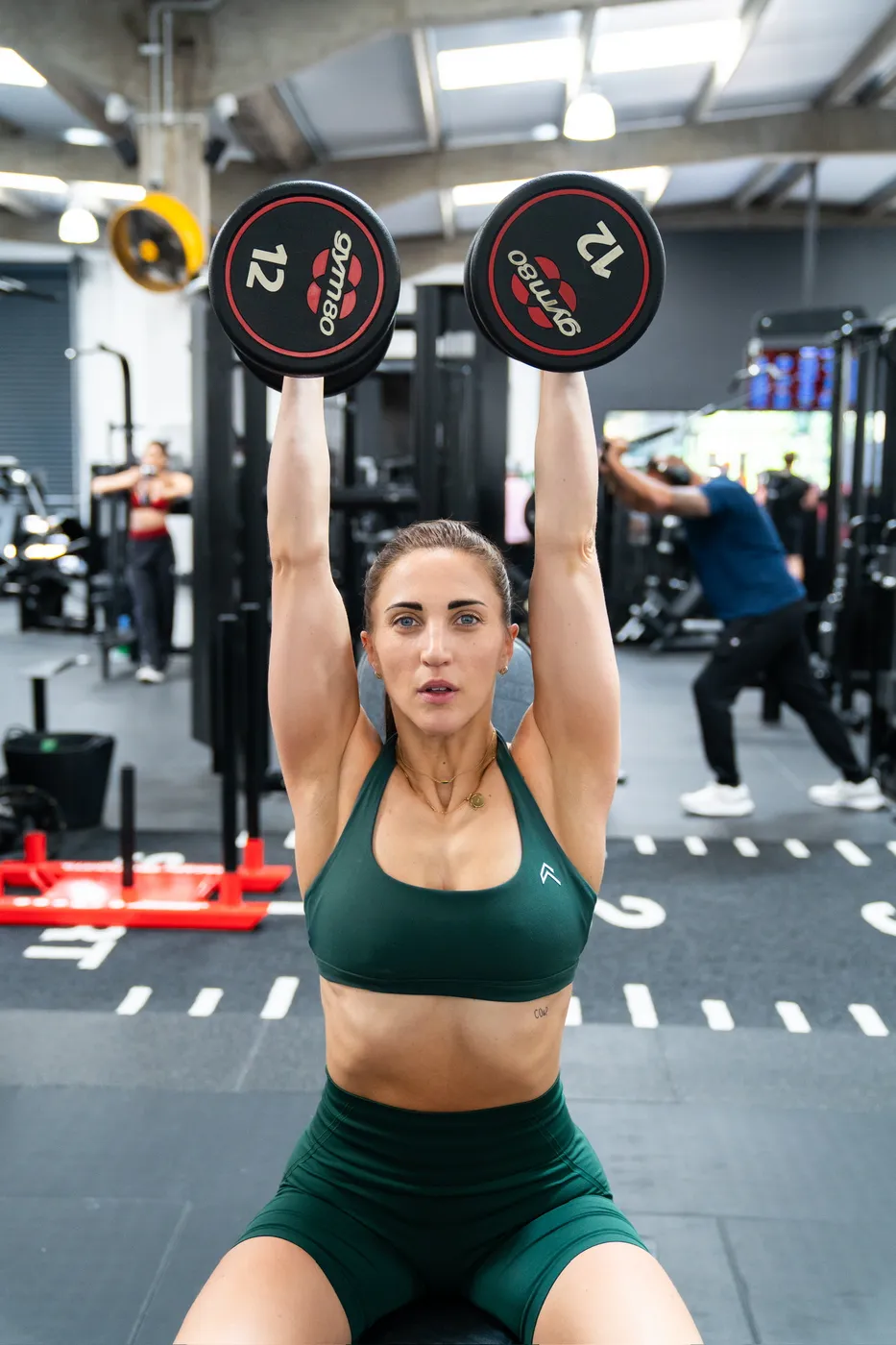
The short answer: the best exercise for menopause is strength training, done two or three times a week, plus some impact work and daily walking. The NHS recommends strengthening activity on at least 2 days a week alongside 150 minutes of moderate activity. Strength training protects your muscle, which you lose with age, and your bone, which you lose fastest as oestrogen falls.
If you have been told to “just keep active” and want to know what that actually means for you now, this guide sets it out. It covers which types of exercise matter, how much to do and how to fit it around aching joints and broken sleep.
What is the best type of exercise for menopause?
Strength training comes first, because it is the one that builds muscle and bone at the same time.
The NHS advice on things you can do for menopause is to exercise regularly, with a focus on weight-bearing exercise to build strength, because this can help protect against weakening bones. It names resistance exercise, such as using weights, as part of protecting your bones.
The Royal Osteoporosis Society says the best way to help your bone strength is to do both impact and strength exercise. Balance exercise then helps keep you steady and lowers your risk of falls.
So the honest answer is a mix, with strength at the centre:
| Type | What it does in menopause | How much | Examples |
|---|---|---|---|
| Strength training | Builds muscle and bone, raises your metabolic rate | 2 to 3 days a week, 20 to 30 minutes (Royal Osteoporosis Society) | Squats, deadlifts, presses, rows, lunges with weights |
| Impact (weight-bearing) | Puts force through bones to keep them strong | Build up to 50 moderate impacts on most days (Royal Osteoporosis Society) | Jogging, skipping, small jumps, hops, dancing |
| Aerobic (cardio) | Heart health, mood, everyday fitness | 150 minutes of moderate activity a week (NHS) | Brisk walking, cycling, swimming |
| Balance | Keeps you steady, lowers your risk of falls | On at least 2 days a week from 65 (NHS), worth starting sooner | Single-leg work, step-ups, tai chi |
| Mobility and restorative | Eases stiffness, helps you recover | As often as you like | Yoga, Pilates, stretching, breathing exercises |
Why is strength training so important in menopause?
Because you lose muscle with age and bone faster after menopause, and lifting slows both.
The Women’s Health Concern weight gain factsheet, reviewed by the British Menopause Society, says the body loses lean muscle as part of ageing, which lowers your metabolic rate. It says regular strength exercise helps build new muscle and start to raise it again.
Bones matter just as much. The Women’s Health Concern osteoporosis factsheet says the major bone loss in women happens with the loss of oestrogen at menopause. Osteoporosis causes over 300,000 fractures a year in the UK, according to the same factsheet. It says weight-bearing and muscle-strengthening exercise are important for bone health.
Heavy lifting has been tested in women after menopause. In the LIFTMOR trial, published in the Journal of Bone and Mineral Research in 2018, 101 women with low bone mass trained twice a week for 8 months. The group lifting heavy weights, supervised, gained 2.9% in spine bone density on average, while the low-intensity home group lost 1.2%. One minor back spasm was the only adverse event.
That was supervised training in a study, with women working up gradually. It shows what is possible with good coaching. It is not a reason to load a heavy bar on your own on day one.
How much exercise does a menopausal woman need?
At least 150 minutes of moderate activity a week, plus strength work on at least 2 days, says the NHS.
The NHS physical activity guidelines for adults also say to break up long periods of sitting. From 65, the guidelines for older adults add activities that improve strength, balance and flexibility on at least 2 days a week.
For strength, the Royal Osteoporosis Society suggests:
- 2 to 3 days a week, with at least a day’s rest in between.
- 20 to 30 minutes, working legs, arms, back and stomach.
- Building up to 3 sets of 8 to 12 repetitions.
- A weight you can lift 8 times with good technique. If you can do 12 and could keep going, go heavier.
A week that covers it all could be three 30-minute strength sessions, a brisk walk most days, a few sets of skips or jumps on two or three days, and a stretch or yoga session when you need it.
What is the best exercise for menopause belly?
Strength training for your whole body, plus more daily walking. Ab exercises alone will not shift belly fat.
No exercise burns fat from one area. Building muscle all over raises the calories you burn, and walking adds to it without wearing you out. Our guide to menopause belly explains why the weight goes to your middle and what else helps.
Is cardio or strength training better for menopause?
Strength training does more for muscle and bone. Cardio does more for your heart and mood. You need some of both.
If you only have time for one, choose strength, then add walking. Swapping one class a week for a strength session is a good first step.
What exercise helps menopause joint pain?
Strength training with exercises adapted to your joints, plus low-impact cardio like cycling or swimming.
Stronger muscles support your joints. A good plan swaps an exercise that hurts for one that works the same muscles without the pain, for example a box squat instead of a deep squat, or a step-up instead of a lunge. Pain that is sharp, sudden or getting worse is for your GP or a physiotherapist to check.
Can you do menopause exercise at home?
Yes. Dumbbells, resistance bands and your own body weight are enough to start.
The Women’s Health Concern factsheet says good strength exercise can include body weight, simple exercises with weights such as squats or bicep curls, and resistance bands. You do not need a gym to begin. You do need to make it gradually harder over the weeks, with more weight or more reps.
When should you check with your GP first?
If you have had a broken bone recently, many fractures, spinal fractures, or a heart or blood pressure condition.
The Royal Osteoporosis Society advises talking to a doctor or physiotherapist first if you have had many broken bones or spinal fractures, or are recovering from one. The Women’s Health Concern factsheet suggests checking with a healthcare professional before starting a new exercise regime. HRT and any other treatment for symptoms are conversations for your GP.
Questions women ask about exercise and menopause
What lifestyle changes can help with menopause symptoms?
The NHS suggests regular exercise with a focus on weight-bearing exercise, a healthy, balanced diet, regular sleep routines and keeping within the recommended alcohol limit. Keeping to a healthy weight can help with hot flushes and night sweats.
How do you overcome perimenopause?
With support on two fronts: your GP for symptoms and treatment, and a plan for training, food and sleep that fits how you feel now.
What are the physical symptoms of menopause?
The NHS lists changes to your periods, hot flushes, night sweats, sleep problems, weight gain, muscle aches and joint pains, palpitations and weakening bones among them. Its menopause symptoms page has the full list.
Where can I find online help with menopause symptoms?
Start with the NHS menopause pages and the British Menopause Society’s patient site, Women’s Health Concern. For exercise, an online coach who specialises in menopause can write a plan around your symptoms.
Is it too late to start strength training after menopause?
No. The women in the LIFTMOR trial were 65 on average and improved their bone density. Start light, learn the movements, then build up.
Training through menopause with ALTR
Our menopause coaching is one to one and online. Natalie, one of our coaches, is a menopause exercise specialist, and every plan puts strength at the centre. If you have never lifted, read strength training for women over 40 first.
When you want a plan written for you, book your free call.