The short answer: a menopause belly is fat that settles around your middle as oestrogen falls. The British Menopause Society’s patient charity says over half of women gain weight around this time, about 1.5 kg a year in perimenopause on average. Strength training, enough protein, sleep and a small, steady change in how much you eat are what help.
If your jeans fit differently and your middle feels softer, even though you eat the same and move the same, you are not imagining it. This guide covers why it happens, how to tell it apart from bloating, and what to do first.
What causes menopause belly?
Falling oestrogen changes where your body stores fat, and losing muscle with age slows how many calories you burn.
The Women’s Health Concern weight gain factsheet (reviewed by the British Menopause Society, September 2026) gives three reasons:
- Hormones. As oestrogen declines, the body becomes more likely to lay down visceral fat, the internal fat around the abdomen. Before perimenopause, gains tend to spread more evenly.
- Muscle. You lose lean muscle as you age. Less muscle means a lower metabolic rate.
- Lifestyle. Some women move less, and some eat slightly more. How much you eat and move are still the biggest factors.
The NHS lists weight gain as a symptom of perimenopause and menopause and says it often affects the stomach and upper body. Menopause usually happens between 45 and 55, though it can come earlier.
Poor sleep, low mood and aching joints make all of this harder. The same factsheet says weight is easier to tackle once those symptoms are under control.
How much weight do women gain in menopause?
On average, about 1.5 kg a year during perimenopause, and around 10 kg in total.
Those are averages from the Women’s Health Concern factsheet, so your own number may be higher, lower or nothing at all. The change in shape is often more noticeable than the number on the scales, because the weight moves to your middle.
| What changes | What it does to your belly | What helps |
|---|---|---|
| Oestrogen falls | More fat stored as visceral fat around the abdomen | Strength training and steady eating habits |
| Muscle declines with age | Fewer calories burned at rest | Lifting progressively heavier weights, eating enough protein |
| Sleep gets worse | Weight is harder to manage, physically and emotionally | A regular sleep routine; talk to your GP if sleep is badly affected |
| Joints ache, energy dips | You move less without noticing | Daily steps, exercises adapted to how you feel |
| Alcohol creeps up | Extra calories, more grazing on snacks | Keeping within 14 units a week |
Is it menopause belly or bloating?
Menopause belly is fat and stays roughly the same through the day. Bloating comes and goes and often feels tight or swollen.
You can pinch fat. Bloating usually makes your tummy feel full, tight or gassy, and it can be worse in the evening or after certain foods. The NHS says bloating is most often caused by gas in the gut, constipation, food intolerance or IBS.
Some HRT types can cause bloating and fluid retention at first. The factsheet says this usually settles over time.
When should you see a GP about a swollen belly?
See your GP if your tummy is swollen or bloated most days, rather than softer.
A swollen tummy that is not weight can be a sign of something that needs checking. The NHS lists a swollen tummy or feeling bloated, roughly 12 or more times a month, as a main symptom of ovarian cancer. It also says these symptoms are common and have many other causes. Get it checked anyway.
The NHS also says to see a GP if you feel bloated regularly, or if bloating comes with weight loss you didn’t intend or blood in your poo. A lump or swelling in your tummy is a reason to ask for an urgent appointment or call 111.
ALTR is coaching, not medical advice. If something feels wrong, your GP comes first.
Does menopause belly ever go away?
It can shrink, but it rarely disappears on its own.
Symptoms of menopause usually last 7 to 9 years, sometimes longer, says the NHS. Waiting it out is a long wait. The fat around your middle responds to the same things as fat anywhere else: muscle, food and activity, kept up for months.
Expect your shape to change before the scales do. The Women’s Health Concern factsheet suggests measuring your bust, waist and hips with a tape, and picking a pair of snug clothes to try again in a few weeks.
What exercise is best for menopause belly?
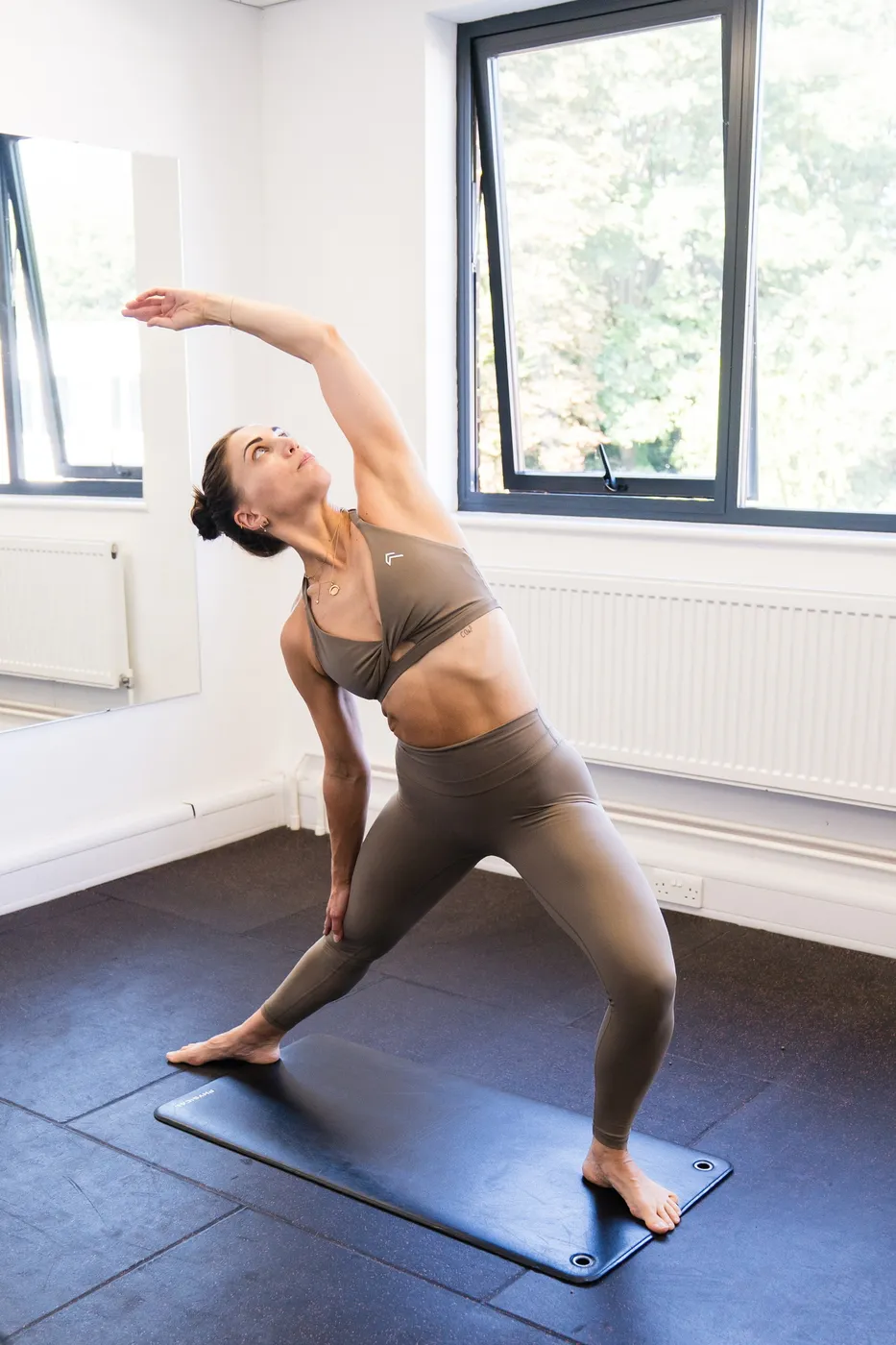
Strength training, done two or three times a week, plus more walking.
No exercise burns fat from one spot. Crunches and sit-ups make your stomach muscles stronger but do not shift the fat in front of them. What works is building muscle all over your body and moving more every day.
- Lift weights. The factsheet says part of the problem is a decline in muscle, and that regular strength exercise builds new muscle and starts to raise your metabolic rate.
- Walk more. It suggests small steps up, such as going from 3,000 steps a day to 5,000, rather than a sudden burst of hard exercise.
- Keep the core work. Planks, dead bugs and carries still matter for your back and posture.
Our guide to the best exercise for menopause covers which types to do and how often.
What is the best diet for menopause belly?
A balanced, regular way of eating that you can keep up for years. Fad diets and cutting food groups make it worse.
The factsheet is clear. Diets under 1,200 calories a day, long fasts and cutting out whole food groups are not recommended. Fad diets lead to the yo-yo effect: quick loss, then more gain.
What it does suggest:
- A small daily calorie deficit of 300 to 500 calories, combined with strength and aerobic exercise.
- A few days of food and activity diary first, eating normally, to see where the easy changes are.
- Regular meals and planned snacks, eaten slowly.
- Fewer unplanned snacks, smaller portions and less alcohol.
Protein matters too, because it helps you keep and build the muscle that holds your metabolism up. Our guide to how much protein a woman needs has the numbers.
At ALTR, nutrition starts with a three-day food diary. Your nutrition coach, Harriet, then builds a plan around how you already eat. There are no banned foods.
Does HRT cause weight gain or help with belly fat?
There is no evidence that HRT causes weight gain, according to the Women’s Health Concern factsheet.
Many women notice they gain weight while taking HRT, which is why the worry is so common. The factsheet says the menopause itself is the likelier cause.
Whether HRT is right for you is a conversation for your GP. The same goes for weight loss medicines. We coach women who take HRT and women who do not.
Questions women ask about menopause belly
Is it possible to lose weight during perimenopause?
Yes. It usually takes longer than it did in your 30s, because you have less muscle and your hormones are changing. Strength training, a small calorie deficit and good sleep are the base. There is more on this in our guide to perimenopause weight gain.
How do you lose hormonal weight gain?
The same way as any other weight gain, with more focus on muscle. Lift weights, eat enough protein, move every day and get symptoms like poor sleep under control with your GP’s help.
Can HRT cause weight gain?
The Women’s Health Concern factsheet says there is no evidence that it does. Some types can cause bloating and fluid retention at the start, which usually settles.
What is the best diet for a 50-year-old woman who is menopausal?
A balanced diet with enough protein, plenty of fruit and vegetables and sources of calcium for your bones, eaten at regular times. Avoid very low calorie diets and cutting out food groups.
Why does my menopause belly look pregnant?
Usually because the weight has settled around your middle as internal fat, which changes your shape more than the same weight on your hips would. If your tummy is swollen and hard rather than soft, or it changes quickly, see your GP.
Where to start this week
Pick one thing from each list above: two strength sessions, a few thousand more steps, a regular meal pattern. Write down how your clothes fit now.
If you want someone to build that plan with you, our menopause coaching is one to one and online, with a menopause exercise specialist on the team. Book your free call and tell us where you are.